
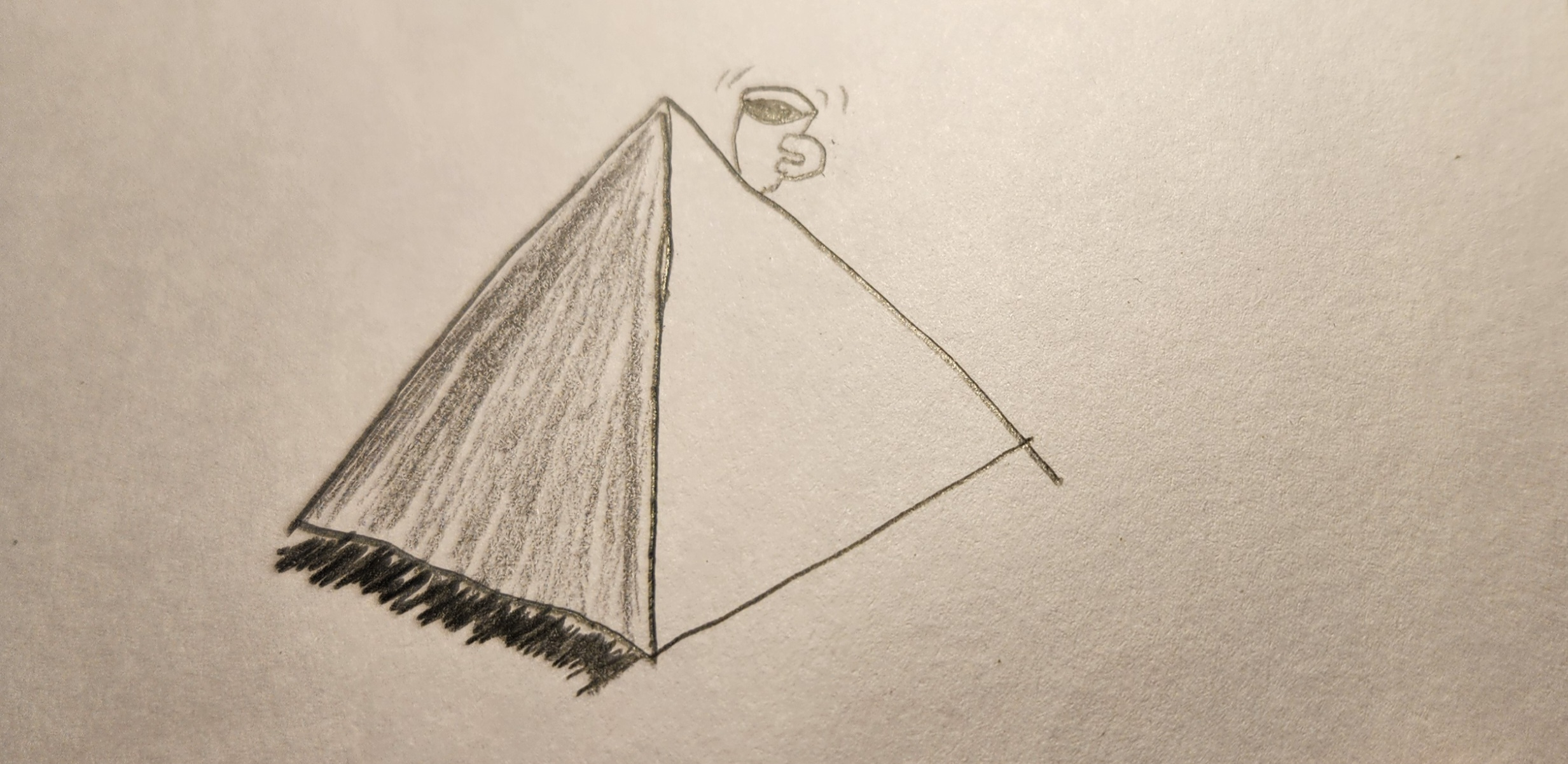
It’s possible to design a table that catches no crumbs.
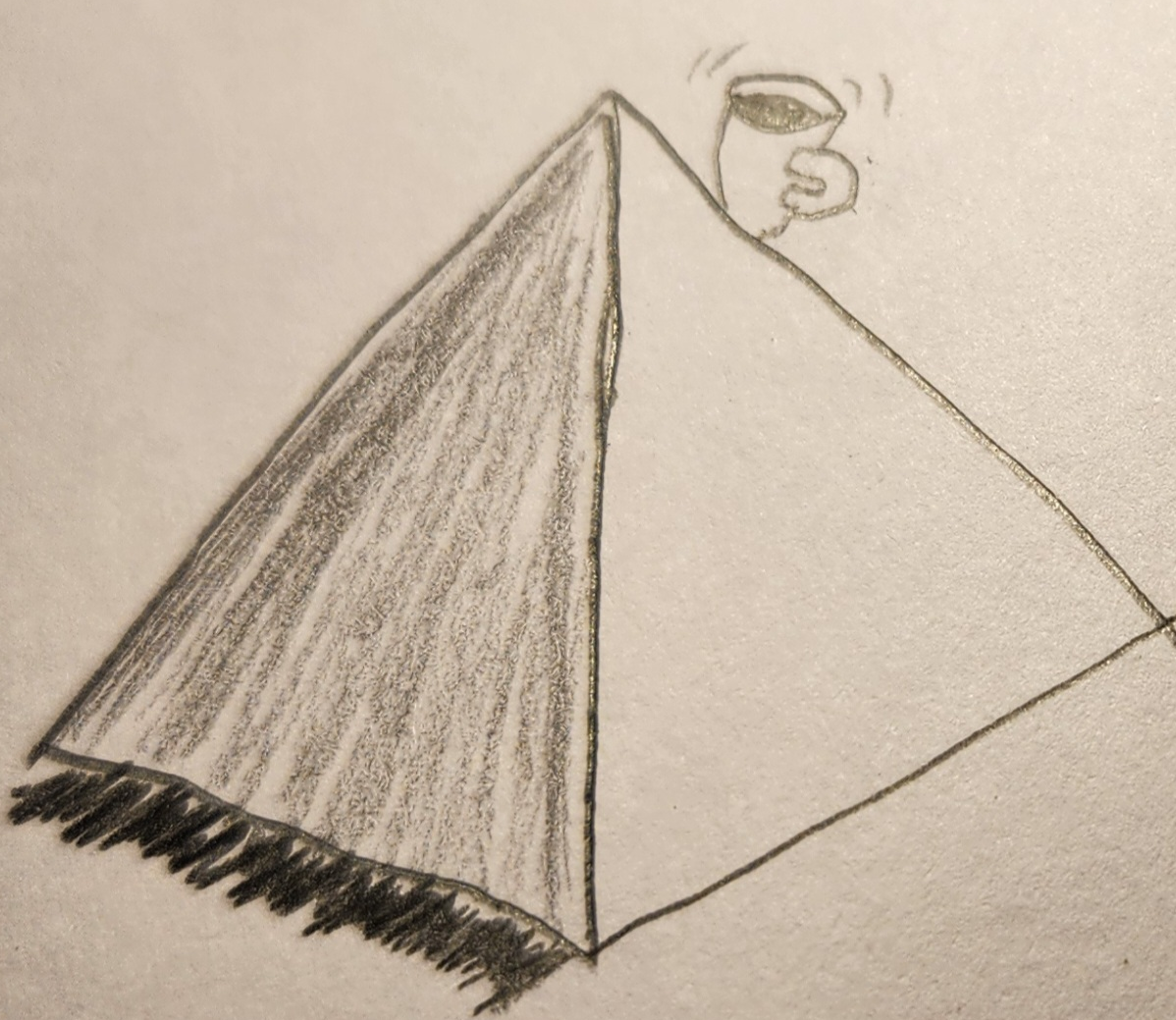
It’s shaped like a pyramid, and it’s not very good at holding things. Taken further, you can avoid dust accumulation by making a tall, thin spire, a paper clip pointing straight up. Good luck with your evening meal.
When designing a system, a product, a device, a story, you have to know what your goals are. You have to identify the purpose of the thing, and what your non-negotiables are. Only then can you begin to grapple with the trade-offs, and to determine what you’re willing to live with.
II
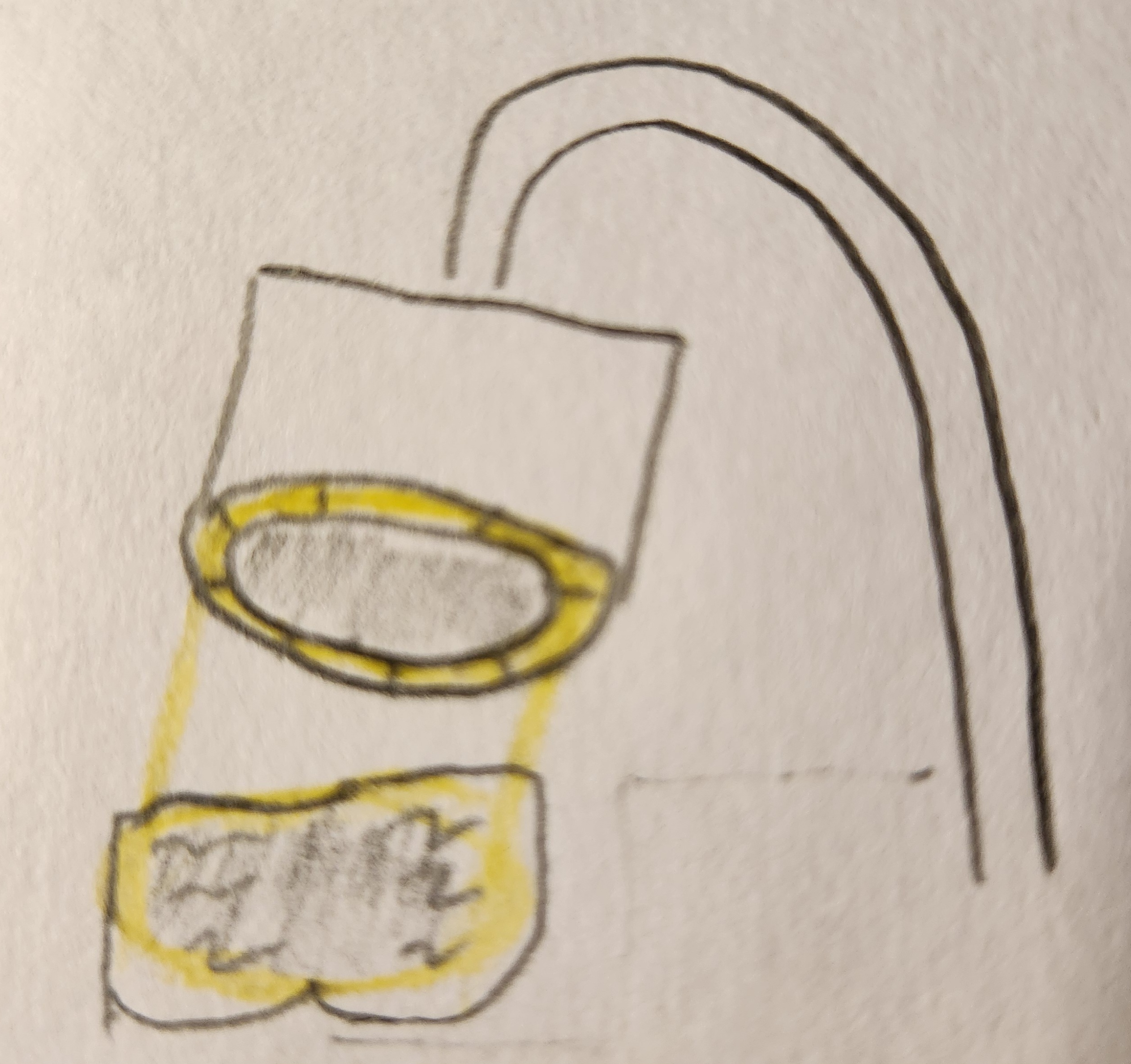
Growing up, my father had a lamp in his living room. To prevent glare, he installed a light shield almost entirely around the bulb. This makes it impractical to read under, unless you were constantly shifting your book to align with the thin halo of light.
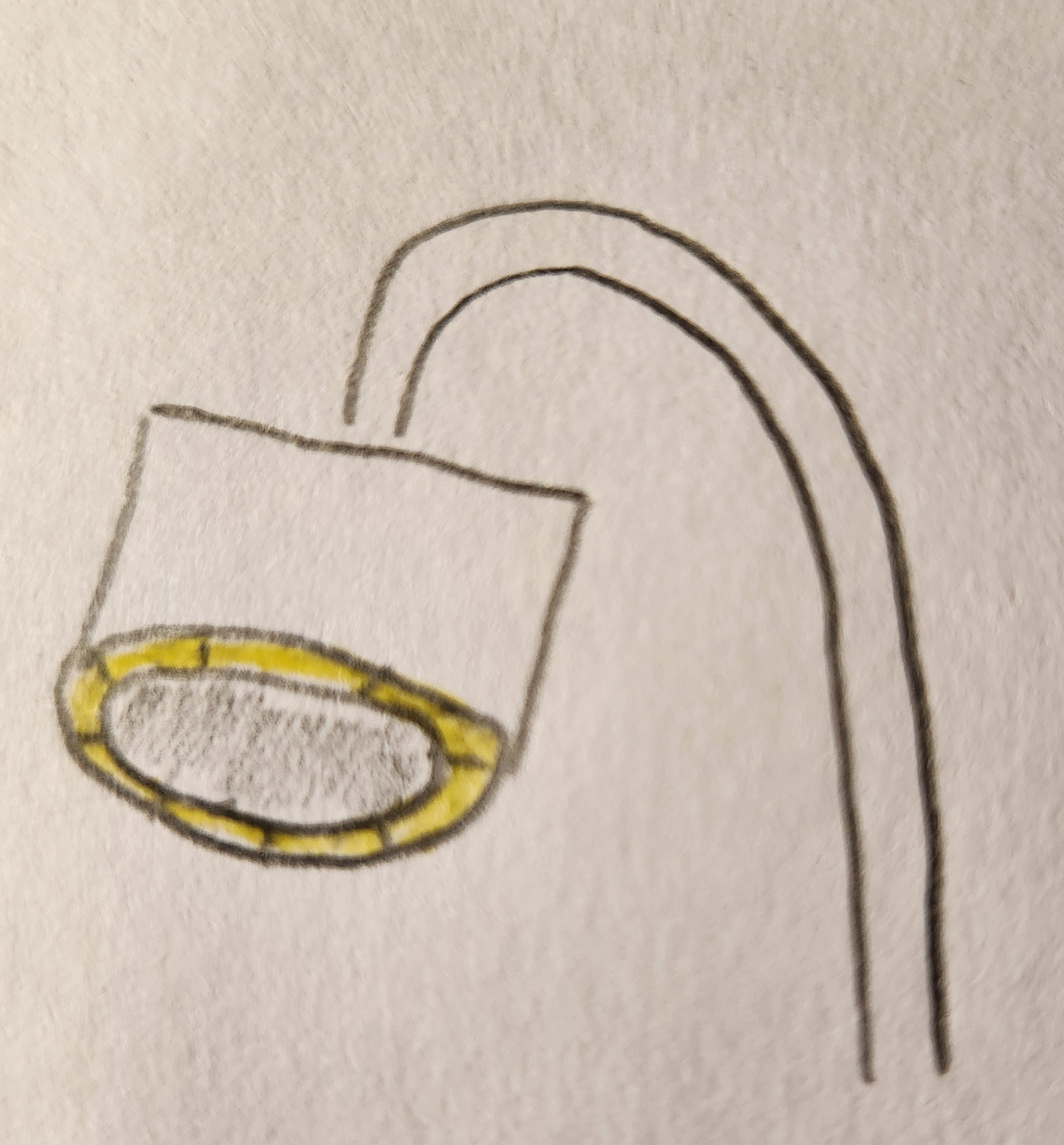
For my father, this was fine. He can count on one hand the number of books he’s read, and have fingers to spare. The goal of the lamp wasn’t to provide light by which to read, it was to make the room ever so slightly brighter. Critically, it wasn’t to provide light to the person sitting in the chair it hovered over. That wasn’t his goal, and the lamp served his purposes.
It did not serve mine. I would retreat to my room, a well-lit sanctuary, with book in tow. My father would cajole me, urging me out to the living room, where I can read as well as anyone else. I could not, I’d say. There is no light here. He’d point to the lamp above me, distributing a halo of light to everywhere I wasn’t, confusion drawn on his face.
III
It’s easy to forget that design is a tradeoff. It’s all a tradeoff, every piece of it. Comedies and tragedies serve different goals, and just as you can’t judge one by the standards of the other, you should not aim to appease the lovers of the things you are not making.
There’s a saying that you can’t make something that everyone loves, that attempting such a feet dilutes your product to a forgettable nothing, to elevator music, to background noise forgotten as soon as it’s out of sight.
Many have proposed solutions to this. If I dislike your art, they say, take it further. Make me hate it. It’s not for me. Hatred is a virtue.
Decide what you are optimizing for, and forget the rest.
IV
What’s more interesting? A squad of generalists? Or one guy who can tank a shot from a howitzer and do nothing else, his buddy who can hack any computer in the world but can’t make eye contact with a mirror, their friend who can talk her way out of a parking ticket and into the white house, and the leader who never misses a shot?
If you have one strength and 3 weaknesses, do you round out the weaknesses? Or do you double down on that strength, becoming the guy you call if you want a 3 pointer made, as long as you don’t care about defense, rebounds, or situational awareness?
There’s logic to rounding off the roughest parts, that’s all good and righteous. But to be the best shining star in one particular thing is how you get noticed. No one knows anything about Joey Chestnut except how many hot dogs he can eat. Why would they? His time spent improving his mile is irrelevant.
So yeah, if your goal is for your table to never gather water markers, scuffs, or crumbs, make a sharp pyramid that will never get used. But know that it’s no longer useful as a table.
V
Computer security is a balance between usability and defense.
Bear with me.
The most secure system is the one no one can access. But even if you disable copy/paste, wall off USB ports, and have three-factor biometrics, someone can still take a picture of the screen. You lock phones at the door, and you’re fighting memory. No matter how much friction you add, you’re just blocking honest people from doing their jobs, from using their devices.
All you’ve done is make the user experience terrible for the people you like. If a human can see the secrets, they can exfiltrate the secrets. And if you don’t trust the people who can see the secrets, what are you doing?
That’s not to say there should be no security, but common sense must prevail. If the requirements get too strict, the people who can leave will leave, and you’re left with people who can’t leave, who have no better options, or who are willing to put up with byzantine restrictions.
And these things don’t happen all at once. They pile up, slowly over time, the same way a car breaks down. Rarely do you wake up and it refuses to run entirely. It’s a series of ignored engine lights and strange noises, of having to apply just a little additional effort to turn the engine over, day after day. It’s the faucet pressure decreasing little by little as sediment gathers, until one day there’s a trickle and you’re fully past the denial phase.
VI
A legally bought DVD will have ads and FBI warnings, unskippable trailers and privacy notices, disclaimers about who does and does not hold the opinions expressed.
An illegitimately obtained one will just start the damn film.
Conclusion
- Consider what your design goals are.
a. Identify any non-goals, things you actively do not want. - Establish your non-negotiables.
- Decide what you want to do best, and double, triple, or quadruple down on it, even to the expense of everything else. If you’re good enough at that one thing, people will adapt or overlook your flaws. Shit, they still let Woody Allen make movies!
- Once you have 1 and 2, handling the tradeoffs that appear becomes intuitive. Either accept them, or sand them off. If they don’t serve 1 or 2, they’re the price of doing business, the crumbs on your table.
- Don’t punish the people who are using your thing. Sometimes, this means extending a bit of trust. If people want to pirate, they will. Don’t make life worse for the people who pay as a result.
This is written broadly, but applies to, at a minimum: software, RPG systems, woodworking, IT computer systems, and books.